
Resources for building owners & facility managers
Commercial HVAC & Refrigeration Resources
Practical information to help you plan equipment replacements, understand maintenance, and manage heating, cooling, and refrigeration problems.
Helpful articles
Plan your next steps with better information.
Explore common equipment questions, maintenance planning, and what to consider before starting a project.
HVAC
Repair or Replace Your Commercial Rooftop Unit
How equipment condition, repair history, and installation requirements affect the decision.
Read the article →Maintenance
What Is Included in Commercial HVAC Planned Maintenance
What to look for in a maintenance agreement and how service frequency is selected.
Read the article →Refrigeration
Walk-In Cooler Not Holding Temperature
Common causes of temperature problems and when to arrange refrigeration service.
Read the article →Boilers
Planning a Commercial Boiler Replacement
What to review before replacing boilers, including piping, venting, access, and downtime.
Read the article →Rentals
When Does a Business Need a Temporary Cooler or Freezer Rental?
How to plan temporary cold storage around your products, site, power, and schedule.
Read the article →HVAC guide
Repair or Replace Your Commercial Rooftop Unit
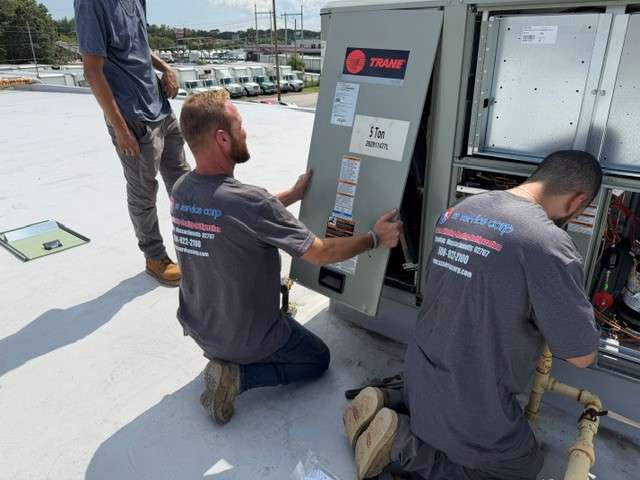
When a commercial rooftop unit breaks down, the immediate goal is to restore heating or cooling. The next question is whether repairing the existing equipment is a good investment or whether it is time to plan a replacement.
Age matters, but it should not be the only factor. A useful recommendation starts with the equipment’s condition, the cause of the failure, and the needs of your building.
When a repair may make sense
A repair may be appropriate when the problem is isolated, the rest of the equipment is in reasonable condition, and replacement parts are available. A failed contactor, belt, sensor, or other component does not automatically mean the entire unit needs to be replaced.
Ask your contractor what failed, what the repair includes, and whether the inspection identified any other significant concerns. This helps you compare the immediate expense with the condition of the complete system.
When to consider replacement
Replacement deserves a closer look when breakdowns keep returning, major components are deteriorating, or parts are difficult to obtain. Repeated service calls, poor temperature control, and changes in how the building is used can also make replacement worth evaluating.
A large repair should be considered alongside the unit’s remaining condition. Replacing one major component does not renew the cabinet, coils, heating section, controls, or other aging components.
Compare the complete installation
A replacement estimate should cover more than the equipment itself. Depending on the job, the scope may involve a curb adapter, crane placement, duct modifications, electrical changes, gas piping, controls, permits, and start-up.
The new unit also needs to fit the building’s current heating, cooling, and ventilation requirements. Matching the old unit’s tonnage without reviewing the application can carry existing problems into the new installation.
Plan before an emergency
If the unit is still operational, planning ahead gives you time to review options, confirm equipment availability, and coordinate work around your business. Ask whether temporary heating or cooling will be needed during the changeover.
SS Service Corp provides commercial HVAC service, equipment replacement, and planned maintenance across Massachusetts, Rhode Island, and Connecticut. Contact our team to discuss your rooftop equipment and the options for your facility.
Maintenance guide
What Is Included in Commercial HVAC Planned Maintenance
Commercial HVAC maintenance should give you a clear picture of your equipment’s condition and the work needed to keep it operating reliably. The right program depends on the systems in your building, how often they run, and the conditions they operate in.
Before comparing maintenance prices, compare the actual scope. Two agreements with the same number of visits can include very different services.
Typical inspection and service tasks
Depending on the equipment and agreement, a maintenance visit may include:
- Inspecting equipment for wear, damage, and signs of leaks.
- Inspecting or replacing air filters.
- Inspecting belts, bearings, motors, and fans.
- Inspecting and cleaning coils as specified in the agreement.
- Checking electrical connections and components.
- Testing operating controls and applicable safeties.
- Inspecting condensate drains and pans.
- Checking heating or cooling operation and recording relevant readings.
- Documenting deficiencies and recommended repairs.
Boilers, chillers, refrigeration systems, and other specialized equipment require their own maintenance procedures. A general rooftop unit checklist should not be treated as a complete scope for every system in the building.
How often should equipment be serviced?
Service frequency should follow equipment requirements, operating conditions, and manufacturer recommendations. Spring and fall visits can be useful for equipment serving seasonal heating and cooling needs. Systems that run longer hours or operate in demanding environments may need more frequent attention.
Restaurants, production facilities, and buildings with critical cooling needs should discuss their operating demands with their contractor rather than choosing a schedule based only on the lowest price.
What should you receive after a visit?
A useful service report identifies the equipment inspected, the work completed, and any issues found. It should distinguish between items requiring prompt attention and work that can be planned for a later date.
That information helps facility managers budget for repairs and equipment replacement. Maintenance can help improve performance and identify developing problems, but it does not guarantee that equipment will never fail.
Clarify what is included
Ask whether filters, belts, coil cleaning, repair labor, replacement parts, and emergency calls are included or billed separately. Confirm which equipment is covered and how additional work is authorized.
SS Service Corp develops planned maintenance programs for commercial HVAC and refrigeration equipment throughout Massachusetts, Rhode Island, and Connecticut. Contact our team to review your equipment and request a maintenance proposal.
Refrigeration guide
Walk-In Cooler Not Holding Temperature
If your walk-in cooler is getting warmer than normal, address the problem promptly. A temperature issue can affect inventory and interrupt your operation, and the cause is not always obvious from the temperature display alone.
Start by recording the temperature, when the problem began, and any recent changes in deliveries or equipment operation. Follow your facility’s product protection procedures while arranging service.
Doors that do not close properly
A door left open or a damaged gasket can allow warm air and moisture into the cooler. Frequent traffic can also add to the cooling load.
Check that the door closes fully, nothing is holding it open, and the gasket does not have obvious gaps or damage. Report problems with the latch, hinges, or closer so they can be corrected.
Blocked airflow or a changed load
Boxes stacked around the evaporator can interfere with air circulation. Large deliveries or products entering warmer than the system was designed to handle can also affect temperature recovery.
Keep the evaporator’s airflow path clear and review whether loading practices have changed. If the problem began after a change in storage volume or product temperature, share that information with your refrigeration technician.
Ice buildup and equipment problems
Heavy ice on the evaporator can restrict airflow and indicate a problem that needs diagnosis. Possible causes include defrost issues, airflow problems, moisture entering the room, or refrigeration system faults.
Other temperature problems can involve fans, controls, the condensing unit, refrigerant leaks, or a compressor. Adding refrigerant without identifying the cause is not a complete diagnosis.
Do not chip ice from coils, bypass safeties, or open electrical panels. Leave equipment diagnosis and repairs to qualified personnel.
When to call for service
Call when the cooler cannot maintain its required operating temperature, temperatures continue rising, alarms repeat, or heavy ice and unusual equipment operation appear. Avoid waiting for a complete shutdown before reporting a developing problem.
Have the model and serial number available if accessible. Photos of the temperature display, visible ice, and equipment can help explain the issue. Tell the service team whether the problem is constant or happens during certain times of day.
SS Service Corp provides commercial refrigeration service, repair, installation, and maintenance across Massachusetts, Rhode Island, and Connecticut. For a walk-in cooler problem, call 508-822-2100. Our phones are answered 24/7.
Boiler guide
Planning a Commercial Boiler Replacement
A commercial boiler replacement involves more than removing the old boiler and installing a new one. The equipment must work with the building’s heating requirements, existing piping, utilities, and operating schedule.
A site review before pricing helps identify what can be reused, what needs to change, and how the work will affect the facility.
Understand what the boilers serve
Start by identifying whether the system provides space heating, domestic hot water through associated equipment, process heat, or a combination of uses. Review the existing equipment, operating history, and any recurring comfort or reliability problems.
Equipment capacity should be evaluated against the building’s needs. The combined input rating of the existing boilers alone is not enough to determine the correct replacement selection.
Review venting and condensate requirements
A change in boiler type or efficiency may require different vent materials, routing, and termination locations. Existing venting should be evaluated for compatibility with the proposed equipment.
Condensing boilers also require a planned condensate disposal arrangement, including neutralization where required. These details should be identified during the site review rather than left for installation day.
Check piping and utilities
The contractor should review the hydronic piping, pumps, expansion provisions, air removal, controls, and isolation valves. Existing components may be reusable, but their condition and suitability need to be confirmed.
Gas supply, electrical requirements, and controls can change with the proposed equipment. Establish who is responsible for each trade and any engineering or permit requirements that apply to the project.
Plan the shutdown and equipment access
Discuss how long heating or hot water service may be interrupted and whether temporary equipment is needed. Buildings with residents, guests, or continuous operations often require additional coordination.
Access matters too. Doorways, stairs, equipment weight, and the route through the building can affect removal and installation. Make sure handling and rigging requirements are included in the planning.
Review the proposal carefully
A clear proposal should identify equipment, removal, piping modifications, venting, controls, utilities, start-up, and exclusions. Confirm whether insulation, disposal, temporary heating, and other supporting work are included.
SS Service Corp provides commercial boiler service and replacement support throughout Massachusetts, Rhode Island, and Connecticut. Contact our team to discuss your existing boiler room and plan the next steps for your facility.
Rental guide
When Does a Business Need a Temporary Cooler or Freezer Rental?
Temporary cold storage can help a business manage a refrigeration outage, planned replacement, renovation, or short-term increase in storage needs. Planning the rental around your products and site conditions helps avoid problems when the equipment arrives.
The first step is to confirm whether you need refrigerated or frozen storage. A cooler and a freezer serve different applications, and the rental equipment must be suitable for the required temperature and product load.
Emergency refrigeration outages
When permanent refrigeration fails, a rental may provide storage while repairs are completed. Availability, delivery timing, setup, and time needed to reach the required temperature all need to be confirmed.
Do not assume equipment will be ready immediately after delivery. Follow your facility’s product handling procedures and confirm the rental is operating at the required temperature before transferring inventory.
Planned replacements and renovations
A scheduled refrigeration replacement may require the existing cooler or freezer to be taken out of service. Temporary storage can be coordinated with the project so inventory has a place to go during the changeover.
For planned work, contact the rental provider early. Confirm the delivery date, expected rental period, and what happens if the construction schedule changes.
Seasonal and short-term storage needs
Events, busy periods, and changing inventory levels can create a need for additional cold storage. The provider should review the amount of product, how it is loaded, and how often the door will be opened.
Equipment dimensions alone do not establish how much usable storage you will have. Shelving, aisle space, and clear airflow around the cooling equipment also affect the layout.
What to confirm before delivery
- Required storage temperature and the products being stored.
- Equipment dimensions and usable interior space.
- Electrical voltage, phase, amperage, and connection requirements.
- A suitable placement area and clear delivery access.
- Responsibility for setup and any electrical work.
- Rental duration, extension terms, and pickup arrangements.
- Monitoring and who to call if the equipment develops a problem.
Confirm the exact requirements for the available rental unit. Avoid assuming a standard outlet, existing extension cord, or unused parking space will be suitable.
SS Service Corp offers temporary cold-storage rental support for commercial customers. Contact our team to discuss your location, required temperature, storage needs, and schedule. Equipment availability and delivery arrangements must be confirmed for each request.
Questions about your equipment?
Talk with our commercial service team.
Serving businesses across Massachusetts, Rhode Island, and Connecticut.
 SS Service Corp · We'll get back to you fast